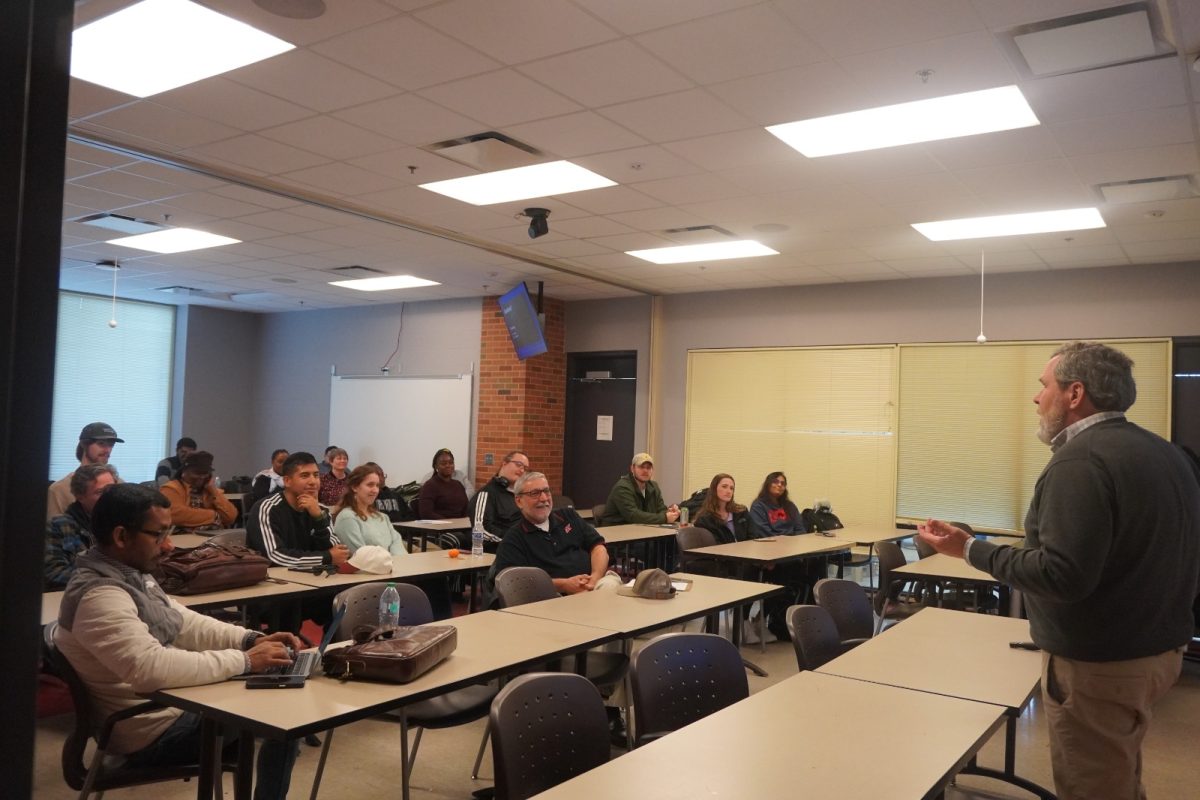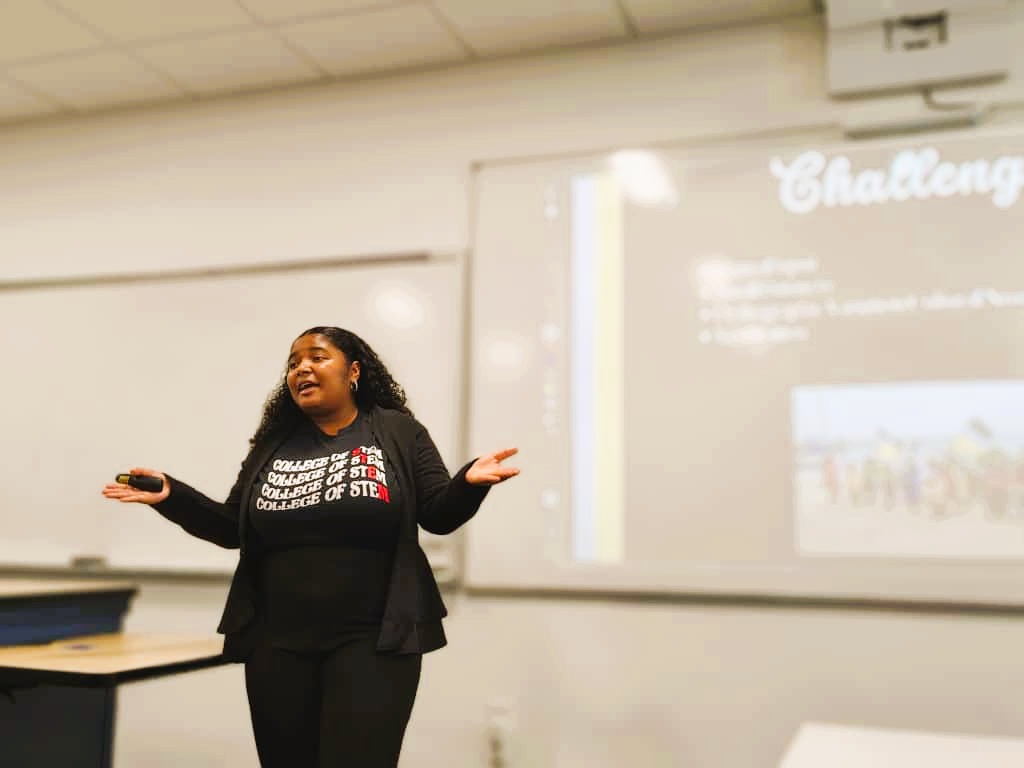
Austin Peay State University students got the opportunity to showcase their scholarly work on a statewide stage last week when they presented original research at the 135th annual Tennessee Academy of Science meeting, held in Knoxville at Pellissippi State Community College.
This year proved especially notable for APSU, as seven students earned top awards, including sweeping the first, second and third-place honors in the Mathematics and Computer Science Oral Presentation category in two sections.
Graduate student Christian Avila, majoring in Financial Mathematics, would take home the third-place prize in the Math and Computer Science Oral Presentations Section II.
Winning an award, he said, felt like “the culmination of all the hard work we put into the research.” For his research, Avila examined the economic risks associated with international tariffs on Tennessee whiskey exports.
“My research was based on a real-world scenario where I had to analyze the risk factor created by a variable and give a recommendation to mitigate the risk,” said Avila.
As a first-time TAS presenter, he admitted that the most challenging part was not knowing the conference’s expectations. Hence, his strategy for presenting was to prepare as if he were delivering it to his classmates and faculty.
Undergraduate student Quinn Schneider, also studying Financial Mathematics, analyzed Formula One race lengths to determine whether shorter events correlate with increased attendance and revenue. Schneider said the hardest part of preparing their project was finding the relevant data, since sports-related statistics can be unpredictable and inconsistent across sources. With this research, Schneider won second place in the Math and Computer Science Oral Presentations Section II.
Both students’ success reflected not only their brilliance but also the support systems encouraging them to step out of their comfort zones. Avila emphasized how the conference strengthened peer connections.
“Sharing time with my peers helped me make stronger connections with them… our mutual support gave us confidence at the time of presenting our work,” said Avila.
Schneider echoed this idea, noting that seeing other presenters excel gave them some hope for future research prospects.
“Seeing other people’s presentations allowed me to see the structure of research in a general sense and how I can structure my research and presentations in the future. Also helped me with verbalizing information rather than keeping it written and coherent,” said Schneider.
Students also shared advice for future TAS presenters. Avila encouraged incoming researchers to embrace the community, while Schneider emphasized the skill of flexibility.
“School shouldn’t just be a place for classrooms. Make connections, support your peers, and celebrate their triumphs. They’ll do the same for you,” said Avila.
“Taking alternative routes is fine. If you don’t have the data for your original idea, work with what you can. There are still strong arguments to be made,” said Schneider.
The Tennessee Academy of Science meeting remains one of the state’s longest-running academic conventions, and APSU’s continued success reflects the university’s commitment to fostering merit in research.