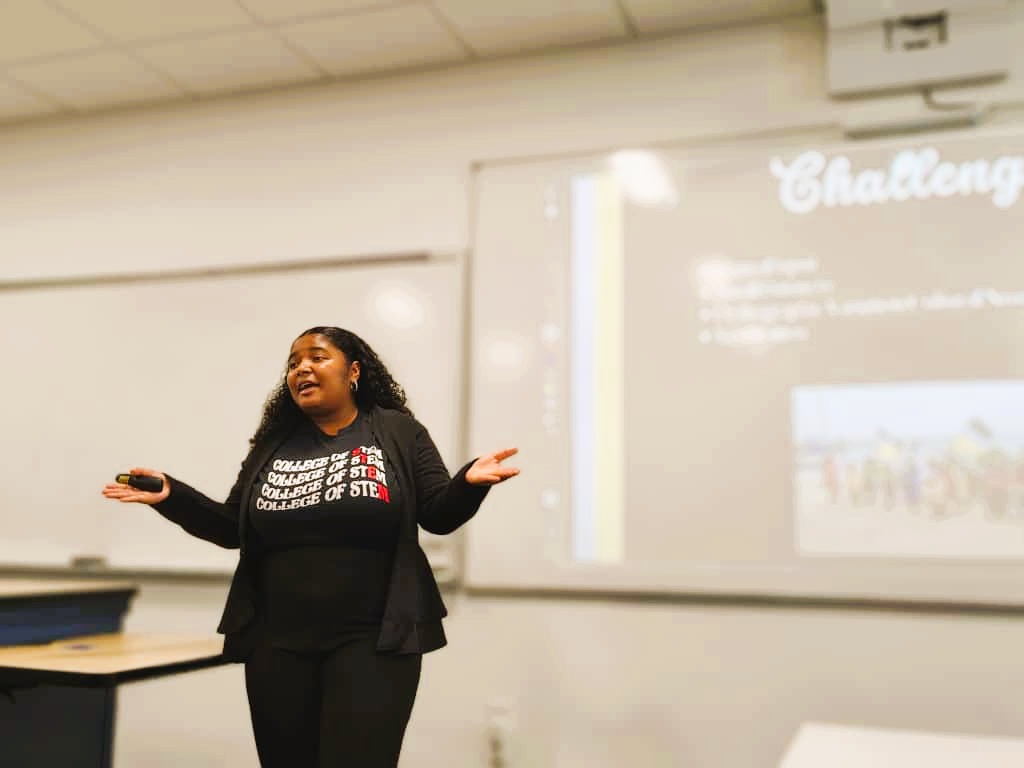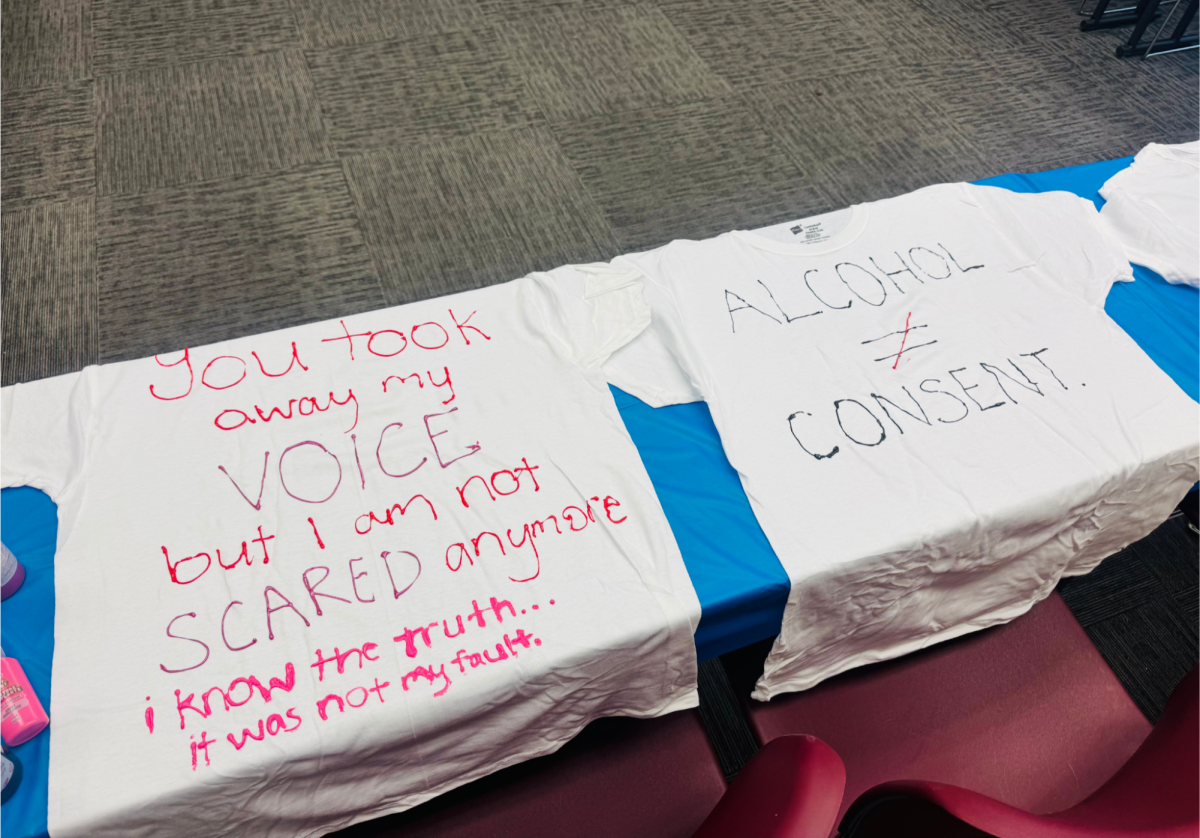
Shirts stretched across tables, paint in hand and a strong message to get across; students leaned in close. Some writing messages of strength, others sharing pieces of their own stories — during Austin Peay’s Clothesline Project event on Wednesday, Feb. 4, 2026.
The event focused on spreading awareness about teen dating violence and interpersonal violence, inviting students to decorate shirts that will later be displayed as a public reminder that abuse can be closer than people think.
The shirts made at the event will be hung on Feb. 11 for National Teen Dating Violence Awareness Day in the MUC Hub from 11 a.m. to 2 p.m. The display is meant to turn quiet experiences into something visible, not for attention, but for awareness, education and support.
Kaitie McKinney, Community Care and Prevention Program Coordinator, said the Clothesline Project has a long history rooted in advocacy and visibility.
“The clothesline project, actually started in Massachusetts in 1990, and it is to bring awareness of interpersonal, domestic and sexual violence across college campuses and the nation in the US,” McKinney said.
McKinney said spaces like this matter because many people don’t recognize harmful patterns until they are already living in them.
“As we gear up for Teen Violence Awareness Day on Feb. 11, I think it’s important to educate people on what that actually is within sexual and interpersonal violence,” McKinney said. “A lot of signs are there as red flags, and a lot of people don’t necessarily look at them or recognize them.”
She said the conversations the event creates can help students step back, reflect, and find support.
“So having these events and these conversations. Just opening people’s eyes to other stories can really help reflect on what is going on in their own life and see ways to improve, ways to set boundaries, and ways to find resources, to steer away from any sort of violence within relationships, and get the support that they need and know that they’re not alone,” McKinney said.
For some participants, the topic isn’t just something they’ve read about; it’s personal.
Theo Ballard, a junior at Austin Peay, said awareness around teen dating violence is important because many teenagers are new to relationships and may not understand what healthy behavior looks like.
“I think it’s important because for a lot of teenagers, they’re very new to relationships, so they don’t quite know what they like and how they should act and how their partners should treat them,” Ballard said. “I think a lot of young people are really uninformed about what a healthy relationship looks like and what behaviors to look out for.”
Ballard said the Clothesline Project matters to her because it creates space for people to speak honestly, especially about something that is often treated like it should stay hidden.
“I’m a survivor of sexual assault and partner violence,” Ballard said. “And when I was in that situation, I was very young and I wasn’t quite informed on what a healthy partner should act like, I guess, and I didn’t really know what it meant to, like, give my consent.”
She said feeling pressured at a young age and not having enough education about abuse contributed to being harmed by a partner.
“I felt a lot of pressure to be very sexual, even though I was so young, which contributed to my lack of education on what domestic abuse looks like, which put me in a situation where I was hurt by a partner,” Ballard said.
Ballard said events like this matter because they remind people how common these experiences can be, even when no one is talking about them openly.
“I also think that there’s just not enough people talking about this issue, even though it is something very common,” Ballard said. “Like a lot of friends and people close to me have also experienced assault and abuse. And I think that people should just be more aware of how common it is and not be afraid to speak up about it.”
The Feb. 11 display will continue with that message: offering a moment for the campus to pause, read and recognize the reality behind the shirts. The display is not meant to sensationalize trauma, but to encourage awareness, prevention and support for students who may be experiencing violence in relationships.